The ICE Age

When the Trump campaign ran on the promise of fear and deporting every illegal immigrant back to wherever, I think most Americans had an idea the US Immigrations and Customs Enforcement (ICE) existed. I think they also knew that it could not handle the workload given to them. It should also be noted they do not just handle immigration. They also handle customs, trade and border control. All these tariffs are in their domain. By most current estimates there are between 11 to 13 million illegal immigrants in the United States. In this day and age you have to check every fact that is thrown your way. A number thrown out is 21 Million illegal immigrants came in under Biden. Which if you run through the numbers and do basic math is ridiculous. That would mean 17,123 illegal immigrants per day. Not to mention most of those would be on border states namely – Arizona, California, New Mexico and Texas. This would mean right across the border somewhere you would have a settlement of over 1 million people in some camp. I have yet to see that on the news. Year ago, during the George W Bush administration, I had a chance to talk with Washington State Congressman Dave Reichert (R). We discussed illegal immigration. He said the idea of removing every illegal immigrant was daunting. Specifically he said “it would take the entire National Guard and that would just handle Los Angeles”. As of this writing ICE is on top of many peoples minds, in the news especially if you are not white. We see the deportations being done ad hoc. More in line with meeting a quota than doing the actual due diligence to identify illegal immigrants.

Xenophobia is a common affliction among many people in America. The definition of xenophobia being a dislike of people from another country. A odd US fear given we are a country of immigrants. That being said it has always been a part of the American experience. There was discrimination when Italians started to come to America, the Irish, Polish etc…Some of that can be traced to basic demographics. We are all familiar with the knowledge that somewhere around 2050 the US population make up will tilt towards those that are non-white. This means there will be more Black People, Hispanic People, Asian People, Native Americans, Pacific Islanders than white people in America. Given our history of being immigrants this was inevitable. That does not mean some people are not pissed about it. In fact many are downright angry about it. When you campaign with fear the emotions that go along with it are anger, hate, loathing etc..all the poorest conditions of human nature.

History can cloud peoples views of the future. It is easy to reflect on the past and come to a conclusion that things were better at a different time and can we not go back to that place in time? That to me is the mystifying thing of Make America Great Again, it’s a nice marketing campaign with no details. I guess this should not be surprising given the source. That would require a basic knowledge of US History. We are good at highlighting our greatness, but in some circles do not like to discuss our dark past, Some would believe that, that is history and we have moved on. But at our core we know our history with slavery still haunts us to this day. America has been a giving nation, a nation many have looked to when in need, but never underestimate the darkness in our heart. Granted that last statement seems rooted in darkness which I am quite comfortable with (lets darken the light and play some Bauhaus). I would shed a more positive light on America by quoting the French political philosopher Alexis De Tocqueville. He said, “The great privilege of Americans does not simply consist in their being more enlightened than other nations, but in their being able to repair the faults they may commit.”

Because we have allowed illegal immigration for decades we have created a shadow economy. As consumers we receive huge benefits from that “illegal” economy. Like it or not those “illegals” contribute greatly to the US GDP. They also perform services such as being the maids at our hotels, picking our fruits and vegetables, construction sites have a Latin flair, landscaping etc.. and the list goes on. The impact is felt in taxes collected, labor force participation (estimate is 4.9% of US Labor is force consists of illegal immigrants), and economic growth. We have allowed a shadow economy to emerge and frankly it is one we can’t do without. There are thousands of construction jobs underway that would be delayed or simply not finished because the labor force relays on immigrants, legal and illegal. When was the last time you saw a white or black woman cleaning your hotel room? What would Las Vegas do? They literally have tens of thousands of rooms. What would a ICE raid look like in Vegas? How many people would have to be deployed? What would be the economic impact. I agree we need to strengthen border control. We also need to think through the consequences of our actions in both the short term and long term.

I think we tend to overlook how Latin culture has enriched the American experience. For all the talk of going back to a husband, wife, two kids, house, car etc..when I think of a family centric lifestyle, just look to the Hispanic community. The family is core to people south of the border. It defines loyalties. More importantly it defines love. If you cross America you will come across Latin communities everywhere, both small and large. Anyone who has visited Miami will find every country in the Caribbean and South America represented. Drive down highway 99 in the Central Valley of California and you would be hard pressed to NOT find Mexican food. Catholic Mass often has a Spanish mass, especially the further south you are. When I see the new fashion of food trucks I see a business designed for the Latin communities and there are plenty. FInd a soccer field and you will find an adult Mexican league with fans…likely family. Overtime the Latin culture has ingratiated itself into the America melting pot. I often like to say, “Show me an American who has not eaten Mexican food and I will show you someone who is not an American”. Probably the best write up on this comes from famed chef, author and travel host Anthony Bourdain title “Under the Volcano” He is a much better writer than I am and he is missed. RIP Anthony.

The above is not what ICE wants to hear. They are focused on violent criminals and gangs like MS-13. Though I understand the sentiment, to portray an entire community as belonging and having ties criminal organizations is wrong. It is what Trump campaigned on in 2016 and every campaign since and it has resonated. It shows that the big lie has a life and can prey upon the weaker minds. If you tell a lie often enough and loud enough eventually it is perceived as truth. There are criminal from Latin America in the US but the percentage is relative. Categorizing all illegal immigrants as the problem neglects the truth. It also ignores what the community provides to the citizens of the United Dates.

Finally there is the question that no one seems to want to ask where are they coming from and why? In Venezuela here is the travel advisory from the US Department of State “Do not travel to or remain in Venezuela due to the high risk of wrongful detention, torture in detention, terrorism, kidnapping, arbitrary enforcement of local laws, crime, civil unrest, and poor health infrastructure.  All U.S. citizens and Lawful Permanent Residents in Venezuela are strongly advised to depart immediately.” If this is for US residents what must life be like for Venezuelan citizens? One of the largest refugee camps for Venezuelans is across the border in Columbia. People are fleeing the Maduro dictatorship. In Mexico a number of states are known to be violent and for a family the fear is their children will be sucked into a life in the cartels. One which will likely lead to a violent death. They flee looking for a better life. Guatemala is in a similar state as Mexico as the country suffers from a high crime rate and lack of safety. Like Venezuela. Guatemala is also a Level 3 in terms of travel advisory. Immigrants are coming to seek a better life for themselves and their children. It is what the American dream was built on and when we let that go a large piece of America will go with it. We will then have to ask the question “Who is America?”

The most famous words of the Statue of Liberty are “Give me your tired, your poor, Your huddled masses yearning to breathe free”. If we turn our back on those words that built a nation who have we become? If we let xenophobia become the dominant faith are we still free? These cultures we fear enrich America. Mark Twain who traveled the world said about his experience “Travel is fatal to prejudice, bigotry and narrow mindedness”. A large part of our nations fear is being consolidated into a isolationist political view. Isolationism is a failed policy. So I will ask again, “Who is America?”

Good Night and Good Luck

Hans Henrik Hoffmann June 25, 2025
America’s Deep Division: History and Politics Today

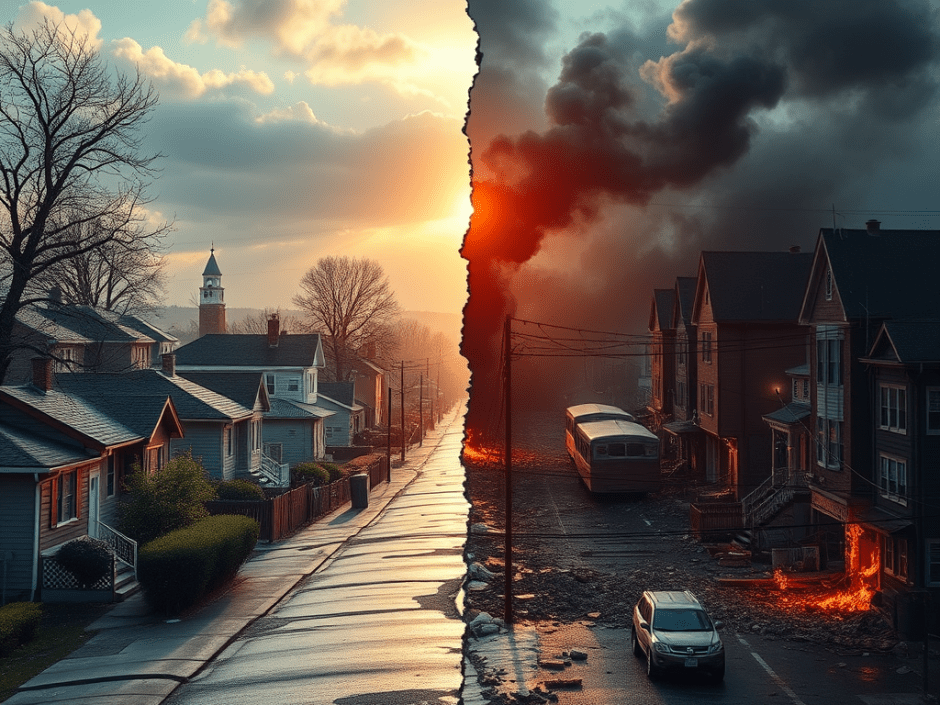
It seems not a day goes by in America where someone does not comment on how divided we have become as a nation. It seemingly grinds us to a halt and causes the worst of human emotions to bubble to the surface. As we raise our voices in opposition to our opponents we lose sight of our own beliefs as we find our emotional center dissolving with each utterance. We are now in the hands of the historians who down the road will write as to how American reached this epicenter of decay. At the end of the day it is the historians who will pass judgment. I can only imagine at the height of their power that Nazi Germany felt in their bones that history would be kind in the retelling of their story. However the historians had a different judgement of their time on earth. We are at that crossroads in the United States. Will our great experiment of democracy end in victory and happiness for its people or will it end in the decay of despair and a totalitarian state, a reminder of histories failures.

To be divided as a nation is not unique to the United States, nor is it new to the United States. Our own civil war makes that abundantly clear. In hindsight the American Civil War was not about states rights (as some have argued, notably Jefferson Davis), it was as Ulysses S Grant said in his memoir “only about the issue of slavery”. The border of the war was easy to define as the Mason-Dixon line divided North and South. Yes there were people on both sides who were either for or against slavery but the confederate states were all in the south and the union states all in the north. The history of the South and the “War of Northern Aggression” has been studied and written in great detail since in ended in 1865 and yet still influences this country to this day. Our black citizens still suffer the consequences of 1619 (when first slave came to America).

The figure of Donald Trump was meant to divide us, any utterance of unity on his part has always been self serving and never for the benefit of the masses. In his world view we can be united if we all simply follow him. He knows the problems and he has the answers. Democracy is about trust, dictatorship is about fear. So much of his campaigning has been based on tapping into that fear. A fear his fanatical base of MAGA supporters is all too happy to embrace. Feeling that they have been betrayed by their government. One could call fear a weak and baseless way to make decisions, but it is an emotion that will lead to irrational and emotional decisions. We watch this playing out day by day with cruel intention.

It is interesting that the worlds largest economy feels like it is being cheated by so many and that somehow we are the victims of a global conspiracy (or at least a Chinese conspiracy). We are the most prosperous nation on the planet, yet we have evolved towards a two class society of have’s and have nots. Killing the middle working class along the way. Gone are the days of the union man working at the automotive factory being able to buy a house and provide for his wife and two kids. It is a legacy of the fifties, that though romantic, was always based on a fantasy. This was post WWII and the world was rebuilding and we had the materials and the labour. It was fun but it could never last. When Milton Friedman uttered the phrase “The only social responsibility a corporation has is to maximize shareholders value”, the good times were gone and let the 1% of America feed there greed. Despite our self professed love of capitalism, it is ultimately a have and have not system. Many who espouse love for the free market are its most significant victims.

Today that former middle white working class lives in despair. Something well documented in Anne Case and Angus Deaton’s book “Deaths of Despair”. The fentanyl crisis has hit this group very hard. In 2013 there were 3105 Fentanyl deaths in the United States, by 2022 the number had jumped to 73,838 deaths. California had the most Fentanyl deaths (6,453) followed by Florida (5,083) and New York (4,950) but as a percentage West Virginia, 60.8 deaths per 100,00 people was a run away winner, sadly. One thing that is consistent when reading and watching shows on fentanyl is it happens in areas where opportunity is scarce and hope is lost. Add to this a highly potent, cheap and addictive drug and death becomes only a matter of time. Not an end of life but a way out of life.

A key for America has always been entrepreneurship. We have made it easy to start and build companies based on our citizens own effort and creativity. From the days of Henry Ford and JP Morgan to todays tech titans of Jeff Bezos and Elon Musk. It is what has made America unique and envied throughout the world. You can achieve your dreams as the US has provided a framework to allow you to dream big. In the dawn of the Gilded Age as the era of industrialization created new wealth, many were left at to beg for work and be thankful at receiving work. There was no regulation, no eight hour days were mandated. Healthcare? Retirement plans? If you worked for the mega rich, you served their interest. If you tried to unionize you would be struck down, sometimes violently. Adam Hochschild’s “American Midnight” is a great read on what was happening domestically in America during WWI. In many instances the threat of unions was met with violence and in some instances death.

Over time and in particular later during FDR’s administration the workers would receive protections and have the ability to form unions. Social Security was introduced to help people retire with something. This would lead to a post WWII economic boom in the United States. A time when all seemed good in America…if you were white. The auto industry boomed, the steel industry boomed, we even made televisions (remember RCA?)! The classic image was the family with TV Dinners sitting in front of the television. The life style was ideal. Husband works at the auto plant, wife stays home and makes dinner while raising two kids. They live in a nice house with two cars in a simple neighborhood. What could go wrong?

First civil unrest occurred as America had to pay the price of past sins. On trial was Jim Crowe. The legacy and tragedy of the American Civil War had not been laid to rest. Luckily a small Indian (India the country) had laid the foundation. Gandhi. His mantra of non-violent protest would become a symbol of the American Civil RIghts movement. It would inspire leaders like Martin Luther King, John Lewis and Bayard Rustin to name but a few and the images shared globally would paint a dark picture of the American experience. The images of Selma, Alabama are seared into the memory of this nation. A time when violence was used to keep a people down, based simply on the color of their skin. Many in America do not want to discuss this past as it provides a portrait of America that is not so perfect, but it is a part of the American journey and to avoid it is to do so at our own peril.

Going back to our economist friend Milton Friedman his goals of shareholder wealth would shred the middle class. Along with Dr Michael Porter’s “Theory of Competitive Advantage”, the age of outsourcing and offshoring had begun. I think what often gets lost is when you offshore work you are not just offshoring the manufacturing of a product, you are offshoring a supply chain. A basic business premise is “Building a product is easy, building a supply chain is very hard”. The American film classic “Tommy Boy” outlines this very well. Based in Sandusky, Ohio. Tommy works for his fathers company Callahan Auto, where they make break pads for America. This story has a happy ending and Callahan Auto and the Sandusky are saved. Nice Hollywood ending. The reality is most companies opted to outsource or offshore the work. This has led to the death of middle America. Many small towns in America, once thriving communities have been left in ruin. Little pink houses for you and me it is not.

The supply chain issues becomes most evident and painful when you discuss items of strategic importance. None more so than semi-conductors. It was Jack Kilby at Texas Instruments who in 1958 invented and created the first integrated circuit or microchip. This would be the foundational block of the modern technology industry. Companies that would follow, it what would become Silicon Valley, would be Fairchild Semiconductor and Intel to name but a significant few. Today we find transistors, semi-conductors, etc..in nearly everything, not just our basic tech of iPhones and laptops, but in vehicles, appliances. thermostats, etc.. The challenge is now that these tech heartbeats are not manufactured in the United States, most are manufactured offshore, primarily in Taiwan. The Taiwanese Semiconductor Manufacturing Company (TSMC) is the world leader. Depending on your source between 50-90 percent of semiconductors come from Taiwan, Founded by another Texas Instruments alum Morris Chang. The worry here is given China’s demand of reunification, if they were to invade Taiwan it would disrupt the global supply chain severely. One may think we should just manufacture in the US and I would agree, but the reality is it would take more than a decade to build and master a manufacturing plant and process like TSMC.

Abraham Lincoln said, “A house divided cannot stand”. The Civil War still is the largest catastrophe in US History with an estimated 618,222 deaths, though the numbers is believed to be higher. With where we are today could the US dissolve into another Civil War? It is a fair question to ask. The mere fact that it is mentioned in some circles is pause for concern, If it did would it be like our previous civil war? The simple answer is no. The American Civil War was divided by the Mason-Dixon line, The south had an economy tied to cotton and the labor force needed to pick the cotton was slave labor and had been for over 200 years, The north, on the other hand, was transforming its economy to something far greater as it was at the start of the industrial revolution. In todays America the division is between the major technology hubs and the fly over states, Though on a map it would look like the areas colored red would have a huge advantage they do not as they lack population density. My view is if civil war were to break out it would mirror in many ways the Spanish Civil War.

The Spanish Civil War has a romantic side to it from a US perspective. Many people of a left leaning nature would go join Lincoln’s Brigade to try and save the Spanish Republic against the fascist’s of Franco in the 1930’s. It sounds nice and was even more romanticized in Hemmingway’s ” For Whom the Bell Tolls”. However the Spanish Civil War was anything but romantic. It was estimated that over 500,000 people died. Some on the battle field and many by execution. The Fascists would capture people and if they belonged to a union or were a communist they often would be executed and buried in one of thousands of mass grave in Spain. Following Franco’s death it was decided in Spain not to try the past. Spain has never fully resolved its past with Franco and memories are still there in Spain from a period of atrocities. In many ways Spain is similar to many countries in that despite the years gone by at some point you have to come to terms with past crimes countries like Cambodia, Argentina, Chile, Brazil, South Africa, Guatemala, Indonesia, etc..In the US I could see this type of violence erupting on political, sexuality and racial lines, there would be no borders just communities.

The next ten years could shape the rest of the century, There is much to ponder. Will China succeed the United States as the pre-eminent global power? After the end of the Cold War we lived in a world order dominated by one: The United States of America. Within the last ten years that had changed to a multi-polar world order, that now includes China. Russia wants desperately to be viewed as a leader much as it was when it was the Soviet Union. Given its shrinking population and relatively small economy, not to mention its disastrous military performance in Ukraine I view that as unlikely. India would be a far better candidate. The biggest challenge for the US right now given its disfunction is are we accelerating China’s ascension to the top of the leader board as THE global power? RIght now given our daily change in policy – domestic policies, global tariffs, immigration policies, monetary policies, etc..it is hard to know what the next day will bring and for our adversaries this means there is opportunity. If one thing holds us back it is short term thinking versus the long term plan.

The thing about history is that there are periods where a large percentage of a population can go mad with self doubt and look for a safe place, this place usually resides in the past. The issue with the past is it can be romanticized and made greater than it really was. In the US the post WWII era is often looked at as somewhat ideal. As stated earlier it had the all-american family with a house, two cars, a television, good paying jobs and a clear path to retirement. It had its challenges such as the emerging and increasingly vocal Civil RIghts movement, but overall the American worker was living the life of happiness. Since the mid sixties we have slowly been moving towards a path of anger and violence which has caused us to lose sight of the American dream as it has started to darken into more of a American nightmare. In Neil Howe and William Swanson’s great book “The Fourth Turning” they outline how histories curve goes through repetitive stages over 80-90 years. The first being Hope and Happiness (Think post WWII). the Second being the Awakening (Vietnam thru Reagan) , the Third being the Unraveling (The fall of the Berlin Wall and communism) and the finally the Fourth being Crisis. We are 80 years removed from WWII and given recent domestic and global issues feels like we are at the cusp of a crisis – previous ones being WWII, The American Civil War and The American Revolution. As Mark Twain said “History does not repeat itself but it often rhymes”

Good Night and Good Luck

Hans Henrik Hoffmann June 7, 2025

The Fourth Tech Tidal Wave – AGI

I have been in the tech industry for over 30yrs, which has been an amazing run. When I started at Microsoft, the battle was between Word and WordPerfect, between Excel and Lotus123. It seemed so cutting edge at the time and at Microsoft we were young, we were passionate and focused on the fact that we would win. We all believed in the Microsoft mission statement, “A PC on every desktop and in every home”. We were pushing very fast providing upgrades to popular products, pushing the channel to sell and create new products and were focused on new and emerging opportunities. It was fast paced and it was exciting. Every day was an opportunity to learn. We were the future. This was really the first tech tidal wave I was a part of and it was a innocent and truly amazing time.

One thing that makes tech exciting is that from time to time moments happen that seemingly push the industry forward by ten years. Like you hit the fast forward button and wound up in a different time and space. In these moments it is as if the industry is at the center of a shark feeding frenzy, with every company fighting and praying to survive. But the blood is thick and many companies are swallowed whole, to be digested and never heard from again. These are the moments where possibilities seem endless and how we live our day to day lives is changed. It creates a tidal wave event where you can either hop on and ride the wave or get swept away to sea.

The year 1995 was significant in learning about these tidal shifts. A phenomenal Microsoft Marketing campaign was closing with the launch of Windows 95 and a small Silicon Valley based company called Netscape Communications was about to IPO. The significance of these two events was immense. Microsoft long had had their mission statement, “A PC on every desktop and in every home”. Though it would take a few years eventually this would come to pass, the Microsoft mission statement had been achieved. In my opinion this was one of the greatest mission statements ever. When Windows 95 launched it was one of the biggest product launches ever and fueled a frenzy of buying. The Windows empire was complete and if you did not own a PC at home you soon did as Windows 95 was much sexier than its predecessors. But the launch of Windows 95 was not enough. People were not buying a PC just so they could write Word documents or do complex spreadsheets in Excel a new buzz word was taking flight…the internet. One company signified this entry of a new market opportunity and it was Netscape Communications, led by the “new ” Bill Gates, Marc Andreesson (in all fairness there have been many “new” Bill Gates’ through the years). The reason we have become familiar with “www” was thanks to the work done by Netscape, prior to the world wide web we had technologies like FTP and Gopher, Netscape didn’t event the world wide web but they popularized it and in order to connect to the internet you needed a PC. When Netscape went public, Wall St went crazy…for the next 5 years. We also during this period become acutely of the emotional response of Wall Street. The dotcom boom raised the internet to new heights, it of course would be tempered by the dotcom bust. It a short time everyone seemed to have a PC at home and a dial up connection to the internet

In 2007 another momentous event would occur. This time it was the launch of Apple’s iPhone. It would be Steve Job’s crowning achievement. Prior to the iPhone the mobile experience had been led by Research in Motion (RIM) and their Blackberry device. Charging and not far behind was Microsoft with their Mobile Phone. Microsoft was relying on their tried and true formula, wait until version 3 and we will start to catch and crush our opposition. In this case the focus was Blackberry. Steve Jobs probably looked at the third release strategy with ridicule. He went about building a phone that was leap years ahead of everyone else. He had learned from his experience with Motorola (remember the Motorola Rock?) to know that he did not want to be beholden to device manufactures or the carriers. Like Microsoft Windows 95 Apple did a great job of hyping the iPhone and when it launched in June 2007 it did not disappoint. It was light years ahead of Windows Phone and Blackberry. The first time you used one you used it you had a real internet experience, you had tons of apps you could download, stream video etc…the bottom line it was fun. Within 6 months Windows Phone and Blackberry were dead. Microsoft would dispute this but they had no answer and by the time they had re-architected the OS, purchased Nokia, launched a new phone (which did get great reviews) the market was too far gone. In the meantime an entire iPhone ecosystem had emerged and in addition to the iPhone they launched the iPad. Today most people carry an iPhone (or an Android device..but that is another story). How many times do you see people just staring at the screen of their iPhone while on a bus? in a restaurant? at work? Zombies of their own making.

It is now 2023 and it has been a while since have had a tidal wave moment, where the industry is set to pivot. That is about to change. On January 18, 2023 Microsoft announced the general availability of its OpenAI bot ChatGPT. The commercialization of AI s not new, for the last decade there have been a number of AI startups and AI being incorporated into everything – go shopping on Amazon and offers appear based on your purchase history and interests. Google search, same thing. It often completes your search request before you are done typing. Every vertical market has AI technology. Financial Services, Health Care, Retail etc… Over time this technology will displace more and more workers in the respective verticals. It is inevitable.

ChatGPT is different. It goes beyond traditional AI. Here I will make a distinction. ChatGPT is not Artificial Intelligence it is Artificial General Intelligence. If you go to OpenAI’s website they make the distinction. We are transitioning to a new frontier where we will interact with technology in a fundamentally different way, not that it will necessarily be new, as Hollywood as immortalized this in film for decades, as has literature. A terminal or device where we interact in a more human and conversational level then merely receiving stale links or print outs. The idea of a computerized device being a friend will become a reality in the not so distant future.

In order to make AGI more useful it needs fuel to help it in making decisions, that fuel is data. Companies wanting to build competing technologies will need huge amounts of data. The race is on and has been going on for some time. Some in the tech industry and some in the geopolitical world. Microsoft in this regard was behind Amazon, Google and even Facebook in capturing huge quantities of data. I learned this first hand in a meeting I had at the Redmond campus. But luckily there was one data repository they did have access to; enter OpenAI and the internet. It seems simple in hindsight but makes the most sense. If you are going to tackle AGI then you need a data source that captures as large a variety of data as possible, who knows may this very blog I write will be a data source for AGI (I asked ChatGPT – I am not well known)

Google received a direct hit when Microsoft announced ChatGPT integration in all its tech. It thought it was leading but in my view they got lazy. Similar to what Microsoft went through with Windows Phone, where Microsoft got caught going through the motions rather than focusing on innovation. If you think about search in general what are you doing when we do a search? You are asking a question. In Google land they provide a answer to the right on occasion, quick view of a wiki page, but usually a bunch of helpful (or no so helpful) links you can click on. In ChatGPT the response is an answer in a conversational tone. They can provide an answer in a quick summary format or it your quest greater detail you can do so. The interesting and exciting thing about ChatGPT is interaction you have with the request is on a more personal level.

We are arriving at a point in time where we will be able to actually do the Turing Test, and in time a machine will be thought to be as intelligent as a human (or superior). For those fans of Kazuo Ishiguro’s novel “Klara and the Sun”, we may enter the era of the artificial friend. We have already glued our children to their iPhone. We may enter an era where troubled kids turn to tech for conversational comfort. To re-wire a child is not that difficult especially when they are two or three years old. The ancient Greeks thrived in the discussion of the purpose of the human race. We may want to reengage in those discussions, because the disruption heading our way may sweep us out to sea if we don’t.

Good Night and Good Luck

Hans Henrik Hoffmann March 22, 2023

Categories Uncategorized

The Tech layoffs…again

The news these past few weeks have been a bit depressing in Seattle. Amazon announced it was laying off 18,000 employees. Microsoft followed a couple of weeks later, saying it will be laying off 10,000. Google, who has a large presence in Seattle announced they will be laying off 12,000. To be clear not all layoffs are in Seattle, just a little over 3000. It is always hard to take this type of news, especially when people you know are getting let go. The driving force is diving economies, fueled by events beyond any individuals control. As humans, we are programmed against uncertainty. I would argue that is when you have great opportunity. Uncertainty makes people anxious. We do not like that. It takes both a physical toll and mental toll. Lost sleep, stress etc..It is not just Seattle, as the economy dives companies like Goldman Sachs are laying off people. With all the doom and gloom, especially in tech, it is easy to imagine dystopian scenarios. However, not all is lost.

It is hard to believe but I have now been over 30yrs in the tech industry and during that time I have now seen several periods of “bust” and economic uncertainty. It started with sitting in a hotel with my wife and 1 yr old child in Santa Fe, New Mexico. We watched CNBC as the entire market went bust. Microsoft stock was affected, and my net worth dropped by 50%. The dotcom bubble had burst. The scenario in this one was a over hyped new world order under the guise of the Internet. Honestly the sentiment was not wrong it was just too early for the tech that would eventually power the web. The following month shocked many people and companies. Retirement plans were put on hold. Big purchases were postponed. Many internet startups went bust. The industry and the time had to do a reset, luckily for many who lost their job in the startup community the big boys were still hiring and many who I had watched leave Microsoft all of a sudden returned.

Looking back on the dotcom “bubble”, there were a number of Wall St gurus hyping stocks that had no real business model (Charles Gasparino’s book “Blood on the Streets” is a excellent source on this topic). Inherently Wall St is a very emotional entity and gets caught up in its own hype quite easily. Online trading was fairly new at that time. It brought in a lot of new participants. They got caught up in the hype. First stop: the tech workforce. It was a crazy time. As a Microsoft employee some of the startups I worked with gave me stock (before Microsoft cut the string on this activity..dang Jeff Raikes). For a brief while I could have sold those stocks at a 150k profit….I learned a lesson as I made less than 20k. But in the end, the dotcom bubble was a minor setback and valuable learning experience. The future would provide more grim reminders. However, in between these “tidal” events, the tech industry was doing fantastic.

The next fail was not one of hype but one of false economic expectations. Capitalism is a beautiful thing and in many ways perfect, but that perfection is not just wealth creation but wealth destruction. It is also controlled by humans, who in their greedy lust do very damaging things. In 2008 that came to fruition. The financial institutions trying to expand their market created new financial vehicles in an effort to spread risk. Providing loans to people where they could buy a house and not start payments for six months (just one example). All of a sudden you had people buying real estate investments, where based on their current level of income realistically they could not afford. Seem obvious that it was a bad business model. But as I said Wall St gets caught up in its own hype. When the bubble finally burst we had a huge issue of capital flow, when a market has no capital it ceases to become a market. Fear gripped the United States and quickly went global. That is a very high level overview and a lot of great books have covered the subject better than I (One of many I recommend is Andrew Ross-Sorkin’s “Too Big to Fail”.). The fear in created was very real.

At Microsoft, we met with customers repeatedly. In the sales force, we all heard the same thing: “I need to do more with less.” Suddenly, the standard Microsoft Enterprise Agreement changed. Instead of having an annual true up where the customer pays for more licenses, we were asked to true down. The customers wanted to pay for fewer licenses. Companies did not need more copies of Microsoft Office, they needed less as they no longer had 10,000 employees they had 7,500. At Microsoft annual company meeting Microsoft COO Kevin Turner tried to calm the troops by sharing a favorite Sam Walton Story (Kevin came to Microsoft from Walmart). Sam had said, “In times of economic uncertainty there are those that participate and those that do not. The latter always gains market share”. I thought at the time Microsoft was going to use its large cash reserve to ride the wave. I believed they would invest in our customers during the downturn. I expected them to come out stronger on the other end. How wrong I was. The next day travel was cut as budgets were slashed. At Microsoft we had to do more with less. We were participants.

It led to what was a first at Microsoft; layoffs. When it was announced it was hard to believe it was happening. It was something that was unfathomable. In hindsight it probably should have been foreseen, the employee count at Microsoft was well over 100,000 and Microsoft was struggling with its own girth. It probably would have had to happen anyway, the financial crisis just accelerated the path to layoffs. I missed the first round of layoffs but was not so lucky in the second. It happened ironically on Nov 4, 2009. I started on Nov 4, 1991. I will not go into all the details but you can read about that day here . When this happens it is a frightening experience especially when you have three young sons. I would land at another job in 8 months. The thing about economies and tech in particular is they always rebound, not to be a financial advisor but I would always have money saved up to survive a year as these cycles repeat themselves.

Every recession has its own motion. The current one for technology folks is interesting in that it comes out of a pandemic. Many companies suffered during the pandemic (did anyone go to Disneyland?). However for tech it was a boom period as everything was done remotely and online. How many Amazon delivery trucks did you see during the pandemic? Where schools struggled as they had to move classes to remote, in tech it was simply an email “you will not come into the office but work from home”. Where many industries were struggling, tech was accelerating. The cloud was growing, streaming services like Zoom and Microsoft Teams were thriving. It seemed the Googles and Amazons of the world would cruise through the pandemic no problem. One issue: geopolitics.

The dotcom boom/bust and financial crisis were largely Wall St created events. The current crisis of inflation and rising interest rates are more the result of global events. Vladimir Putin has a strong sense of Russian history. We all know he lamented the downfall of the Soviet Empire. On February 22, 2022 he set in motion the Russian attack on Ukraine. Russia being a major supplier of oil on the global markets (second only to the United States) sent energy prices sky rocketing. This set in motion a cascade of events. Prices began to rise. The Federal Reserve increased interest rates to combat rising inflation. For the first time in a long time a big impact was on food prices. When food and gas prices increase you have to make decisions about purchases and things begin to slow down. When they slow down companies are forced to make decisions: layoffs.

So here we are again. The giants all laying thousands of people off. A lot of uncertainty about the future, which leads to fear. Having now been through 3 cycles (and who knows I could still get laid off during this cycle) I am not as worried as before as every time it has happened the tech sector has come back stronger. One thing that was ingrained upon me early in my career by Bill Gates was if you are doing 9 things right and one thing wrong, what are you doing wrong? Even though we commanded 90% market share we were always fearful of what was around the corner. What big opportunities are we missing? If you look at Microsoft’s big competitors they operate the same way. It just takes a technological breakthrough to wipe away a business unit or destroy a company. The iPhone destroyed Windows Mobile and crushed Blackberry (does anyone own this device anymore?). Google right now is stressed about OpenAI and Chat GPT. When these moments happen they pull the industry to new heights, which means new jobs and new opportunities.

Right now, if you are out of work, enjoy time with family and friends. Reflect on your past. Position yourself for your future. It is ok now and then to pause from work. Use this time to assess life. Determine the values that are most important to you. Each year, I become more optimistic about the tech sector. This optimism grows as we continue to tackle new problems and challenges. We create new innovations, most of which will fail. But those that do not will be part of reshaping the industry. With every change comes new opportunities. There will be incremental changes and big changes. Right now AI is rapidly evolving and down the road we will have Quantum computing. These are just a few things to think about during your not self determined time-out. Enjoy it and remember the future is so bright you gotta wear shades.

Good Night and Good Luck

Hans Henrik Hoffmann Jan 25, 2023

Categories Uncategorized

10 Books from 2022 I would recommend

I am part of a book group that set a goal of 22 books read for 2022. I am proud to say I read 29 so I have a fair amount of books to choose from for my top 10 list. What are my criteria? I think the first is do I remember the book and refer back to it in conversation and my thoughts. I appreciate great writing in fiction and non-fiction. It was hard to narrow down the list as a number of books I really liked did not make the list. Enjoy the list and hopefully one or two books catches your interest.

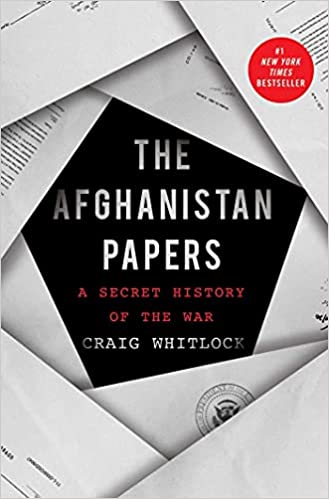
First book I recommend is Craig Whitlock’s book the “Afghanistan Papers: A Secret History of the War”.

An engaging account of the 20 years the US spent in Afghanistan. The book highlights fundamental challenges the Military faced during their time in the country. There was no central city that controlled the economy or was there a historical seat of power. Kanduhar was called the capital, but Afghanistan was a series of regions controlled by varios warlords with different allegences and competing agendas. The poverty of the nation impacted life decisions – do I join the police force or go to the field and harvest poppies? At the end of the day when you have a family to feed you follow the money. Having a population that was largey uneducated created a series of challenges for the United States. The book covers in part 4 administrations, by far the most time is spent with GW Bush and Obama as they covered 15 of those 20 years. It was an engaging account of what went wrong in Afghanistan and why. Worth the read.

Second book I recommend is Mark Twain’s “The Innocents Abroad”

I love Mark Twain, there is a reason he his a gigantic icon in American Literature, and one of its most influential. In “The Innocents Abroad” he takes us on a journey to Europe and the Holy Lands. The book is full of Twain’s famous wit and astute observations. The book starts in the Atlantic in the Azores before moving onto the continent. The book is two parts as Twain travels the southern part of Europe and eventually meets with Czar Alexander II on the coast of the Black Sea, before moving to the second part of the book as Twain visit the Holy Lands. Like many great writers, Twain is well versed in scripture which lends to the observations he makes along the journey. It would be fair to say that all great American writers stem from Twain.

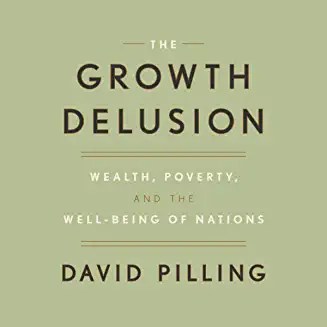
The Third Book is “The Growth Delusion” by David Pilling

It seems we have been conditioned over the last fifty plus years to believe that all a country needs for its wealth and happiness is to grow the GDP, that mystical measure of goods and services. I had read Pilling’s previous book “Bending Adversity” about his time in Japan, where in the book he questioned GDP as a measure of success since Japan has a declining population (a trend not unique to Japan). It is a thought provoking book that provides a history of the term GDP – interestingly coined by a Ukranian economist. In the end the argument is being made, is GDP still the best way to measure the success and happiness of a nation? This book makes that open for debate

The fourth book I chose is Evan Osnos’ “Wildland: the Making if American Fury”.

America has been through a tough journey over the past several years. Evan Osnos attempts to capture what has led to this American disfunction and anger over the past few decades. He does so in three different settings. One in West Virginia where he worked post college for a local paper. The second where he grew up in Greenwich Viilage, CT once a humble community now overwhelmed with massive wealth. The third being a black community in Chicago. As he returns to these locations he finds dessolation in two areas and a loss of hope (a loss of the American Dream) and one representing the mega wealth of the 1% of America. America over the past couple of decades has become an angry nation, focused on perceived ill’s done by its government, while ignoring a larger picture in play. This book did a great job in at least providing some understanding as to what went wrong in America and why we are at a inflection point in our history.

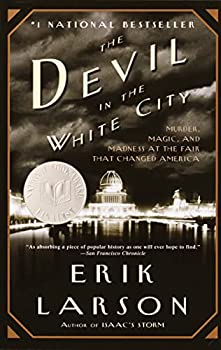
The fifth book on my list is Erik Larson’s fantastic book “Devil in the White CIty

Erik Larson is a favorite author who chooses unique events in history. In this case it is the Worlds Fair of 1893 in Chicago. It is a duel story – one of the challenge of creating a magnificent World Expo and the other of a seriel killer. The driver for the Expo was to make something greater than the Paris Expo of 1889. A key figure was the famed landscape architect, Frederick Law Olmstead as he desired to make the worlds most amazing fair grounds. On the flip side underneath it all was H. H. Holmes believed by many to be the first modern day seriel killer. The book keeps you engaged as the Expo is under a considerable time crunch and the seriel killer gets better with practice. Fun read.

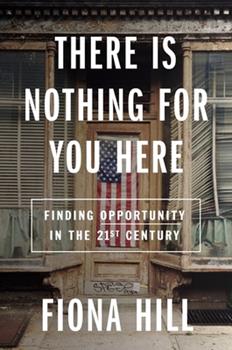
The sixth book is “There is Nothing for You Here” and given my blue collar roots one I related to

Fiona Hill grew up in the Northeastern part of Engalend. A very blue-collar part of the country and one with history in the coal mines (her father was a coal miner). An area that when Margaret Thatcher came to power was decimated by the free market, whcih Thatcher ushered in as a desciple of Milton Friedman. It serves as notice that though there are great benefits to free market economics, there will always be consequences. Fiona Hill was lucky as she was interested in Education and working her way up. She attended University of St Andrews. She eventually came to the US and worked in the Trump adminstration. She would build a career based on her education as a scholar on the Soviet Union, spending several months in Moscow in 1987 (interesting that I would visit Hungary and Czechosslovakia during that same period). She paints a story of a person, like many, who no matter where they end up our bound by their roots

The seventh book “Ghosts of Spain” returns me to Spain, where not a year goes by I do not read a book about Spain

A country that I have visited several times and one that is close to my heart. Giles Tremlett is a British journalist who works for the Guardian and lives in Madrid. If you are interested in Spanish history and culture this is a great overview of Spain and the differnet regions. It starts with the Spanish Civil War but quickly goes to the diffeent regions of Spain – Basque, Catelnia, Andalusia, La Mancha, etc..You learn about the ETA, Flamenco, etc..It was a really interesting and engaging read and one that made me want to go back to Spain. One thing he pointed out is there are not mant great academics focused on the Spanish Civil War, many are from outside (Paul Preston and Hugh Thomas). The War is not that far removed from memory in Spain, Franco died in 1975, so the pain of that era is still remembered

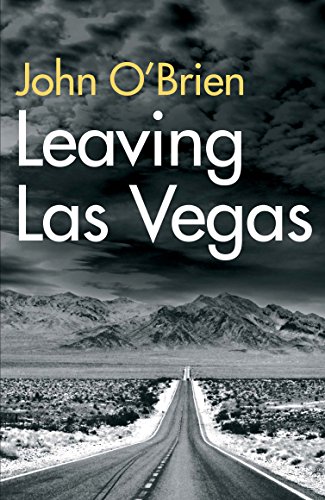
Th eigth book, “Leaving Las Vegas” and one that was inspired by the movie of the same name, which it was based upon

A book I had on my list since the movie came. I had heard it was an exceptionally well written book (it s also a quick read at less than 150 pages). The book is far more brutal than he movie and dives deeper into alcoholism and prostitution. What stands out is O’Briens writing. It is clean and simple and easy to connect and engage with. It is the only book he released (a few were released posthumously). He died at the age of 33 and the book was called his “suicide note”. I doubt he had a good life, it s a shame he did not realize his talent as a writer. We are all less for it

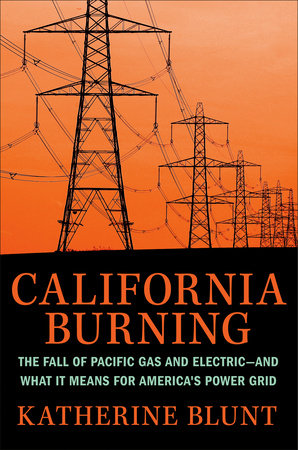
The ninth book, “California Burning” a non-fiction book that tackles “The Grid”.

An area that until recently has been left to decay, is the US infrastructure. This book documents the cost of Pacific Gas and Electruc going public, where shareholder value takes precedence. Early on PG&E brought in Accenutre as a lead consultant who focused on business value (which meand cutting costs). Consequently they reduced budget in areas like safety. In Nothern California they have over 700.000 utiity poles, many very old (between 50yrs and close to 100yrs). Combine this with global warming and a very dry landscape, with high winds and you have the makings of a disaster. This led to the Camp Fire (Paradise, CA) where 85 people died. This is a facinatig book on how when mutilple things come together due to neglegence and greed that disasters occur. We take the electrical grid for granted but with increasing energy demands combined with climate change we as a nation need to rethink our investments in American infrastructure. This was a book I could not put down

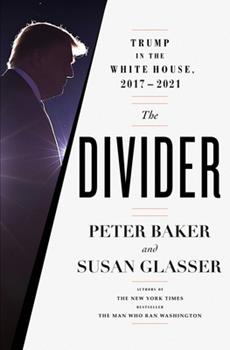
The tenth and final for this years list, “The Divider” and a return to politics.

A political junkie I am. Having read Baker before I knew he was a thorough journalist and combined with his wife it made for a powerful and disturbing read, A lot covered territory covered before. Trumps disdain for military leaders who are not loyal to him, this stemming more from his lack of understanding of the basic checks and balances in the US constituion. A general lack of knowledge of why US alliance exist and their value. Trump was often called a transactional President. Coming from a business world he sought instant gratifcation, almost always in the form of dollars. What comes through in the book is his extreme vanity and lack of self confidence. When challenged it usually led to emotional meltdowns, leading to beratings of those who were in his administration. The Trump administration had high turnover and usually could be traced to the man at the top. He glorified himself at every opportunity. This book is well researched and a engaging read.

Categories Uncategorized