10 Books from 2022 I would recommend

I am part of a book group that set a goal of 22 books read for 2022. I am proud to say I read 29 so I have a fair amount of books to choose from for my top 10 list. What are my criteria? I think the first is do I remember the book and refer back to it in conversation and my thoughts. I appreciate great writing in fiction and non-fiction. It was hard to narrow down the list as a number of books I really liked did not make the list. Enjoy the list and hopefully one or two books catches your interest.

First book I recommend is Craig Whitlock’s book the “Afghanistan Papers: A Secret History of the War”.
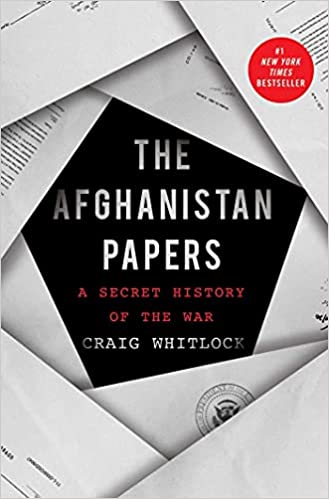
An engaging account of the 20 years the US spent in Afghanistan. The book highlights fundamental challenges the Military faced during their time in the country. There was no central city that controlled the economy or was there a historical seat of power. Kanduhar was called the capital, but Afghanistan was a series of regions controlled by varios warlords with different allegences and competing agendas. The poverty of the nation impacted life decisions – do I join the police force or go to the field and harvest poppies? At the end of the day when you have a family to feed you follow the money. Having a population that was largey uneducated created a series of challenges for the United States. The book covers in part 4 administrations, by far the most time is spent with GW Bush and Obama as they covered 15 of those 20 years. It was an engaging account of what went wrong in Afghanistan and why. Worth the read.

Second book I recommend is Mark Twain’s “The Innocents Abroad”

I love Mark Twain, there is a reason he his a gigantic icon in American Literature, and one of its most influential. In “The Innocents Abroad” he takes us on a journey to Europe and the Holy Lands. The book is full of Twain’s famous wit and astute observations. The book starts in the Atlantic in the Azores before moving onto the continent. The book is two parts as Twain travels the southern part of Europe and eventually meets with Czar Alexander II on the coast of the Black Sea, before moving to the second part of the book as Twain visit the Holy Lands. Like many great writers, Twain is well versed in scripture which lends to the observations he makes along the journey. It would be fair to say that all great American writers stem from Twain.

The Third Book is “The Growth Delusion” by David Pilling
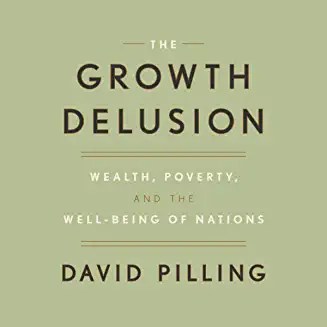
It seems we have been conditioned over the last fifty plus years to believe that all a country needs for its wealth and happiness is to grow the GDP, that mystical measure of goods and services. I had read Pilling’s previous book “Bending Adversity” about his time in Japan, where in the book he questioned GDP as a measure of success since Japan has a declining population (a trend not unique to Japan). It is a thought provoking book that provides a history of the term GDP – interestingly coined by a Ukranian economist. In the end the argument is being made, is GDP still the best way to measure the success and happiness of a nation? This book makes that open for debate

The fourth book I chose is Evan Osnos’ “Wildland: the Making if American Fury”.

America has been through a tough journey over the past several years. Evan Osnos attempts to capture what has led to this American disfunction and anger over the past few decades. He does so in three different settings. One in West Virginia where he worked post college for a local paper. The second where he grew up in Greenwich Viilage, CT once a humble community now overwhelmed with massive wealth. The third being a black community in Chicago. As he returns to these locations he finds dessolation in two areas and a loss of hope (a loss of the American Dream) and one representing the mega wealth of the 1% of America. America over the past couple of decades has become an angry nation, focused on perceived ill’s done by its government, while ignoring a larger picture in play. This book did a great job in at least providing some understanding as to what went wrong in America and why we are at a inflection point in our history.

The fifth book on my list is Erik Larson’s fantastic book “Devil in the White CIty
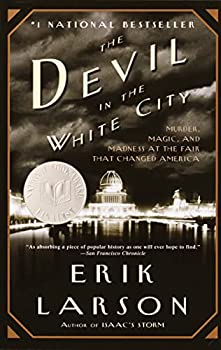
Erik Larson is a favorite author who chooses unique events in history. In this case it is the Worlds Fair of 1893 in Chicago. It is a duel story – one of the challenge of creating a magnificent World Expo and the other of a seriel killer. The driver for the Expo was to make something greater than the Paris Expo of 1889. A key figure was the famed landscape architect, Frederick Law Olmstead as he desired to make the worlds most amazing fair grounds. On the flip side underneath it all was H. H. Holmes believed by many to be the first modern day seriel killer. The book keeps you engaged as the Expo is under a considerable time crunch and the seriel killer gets better with practice. Fun read.

The sixth book is “There is Nothing for You Here” and given my blue collar roots one I related to
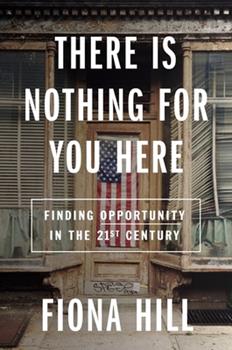
Fiona Hill grew up in the Northeastern part of Engalend. A very blue-collar part of the country and one with history in the coal mines (her father was a coal miner). An area that when Margaret Thatcher came to power was decimated by the free market, whcih Thatcher ushered in as a desciple of Milton Friedman. It serves as notice that though there are great benefits to free market economics, there will always be consequences. Fiona Hill was lucky as she was interested in Education and working her way up. She attended University of St Andrews. She eventually came to the US and worked in the Trump adminstration. She would build a career based on her education as a scholar on the Soviet Union, spending several months in Moscow in 1987 (interesting that I would visit Hungary and Czechosslovakia during that same period). She paints a story of a person, like many, who no matter where they end up our bound by their roots

The seventh book “Ghosts of Spain” returns me to Spain, where not a year goes by I do not read a book about Spain

A country that I have visited several times and one that is close to my heart. Giles Tremlett is a British journalist who works for the Guardian and lives in Madrid. If you are interested in Spanish history and culture this is a great overview of Spain and the differnet regions. It starts with the Spanish Civil War but quickly goes to the diffeent regions of Spain – Basque, Catelnia, Andalusia, La Mancha, etc..You learn about the ETA, Flamenco, etc..It was a really interesting and engaging read and one that made me want to go back to Spain. One thing he pointed out is there are not mant great academics focused on the Spanish Civil War, many are from outside (Paul Preston and Hugh Thomas). The War is not that far removed from memory in Spain, Franco died in 1975, so the pain of that era is still remembered

Th eigth book, “Leaving Las Vegas” and one that was inspired by the movie of the same name, which it was based upon
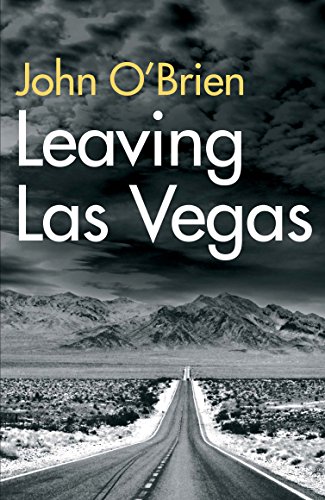
A book I had on my list since the movie came. I had heard it was an exceptionally well written book (it s also a quick read at less than 150 pages). The book is far more brutal than he movie and dives deeper into alcoholism and prostitution. What stands out is O’Briens writing. It is clean and simple and easy to connect and engage with. It is the only book he released (a few were released posthumously). He died at the age of 33 and the book was called his “suicide note”. I doubt he had a good life, it s a shame he did not realize his talent as a writer. We are all less for it

The ninth book, “California Burning” a non-fiction book that tackles “The Grid”.
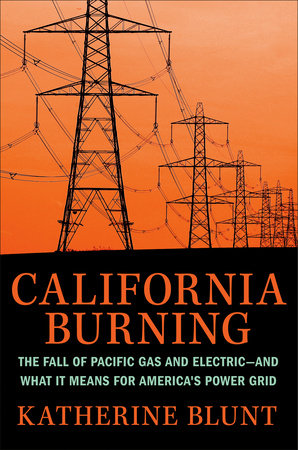
An area that until recently has been left to decay, is the US infrastructure. This book documents the cost of Pacific Gas and Electruc going public, where shareholder value takes precedence. Early on PG&E brought in Accenutre as a lead consultant who focused on business value (which meand cutting costs). Consequently they reduced budget in areas like safety. In Nothern California they have over 700.000 utiity poles, many very old (between 50yrs and close to 100yrs). Combine this with global warming and a very dry landscape, with high winds and you have the makings of a disaster. This led to the Camp Fire (Paradise, CA) where 85 people died. This is a facinatig book on how when mutilple things come together due to neglegence and greed that disasters occur. We take the electrical grid for granted but with increasing energy demands combined with climate change we as a nation need to rethink our investments in American infrastructure. This was a book I could not put down

The tenth and final for this years list, “The Divider” and a return to politics.
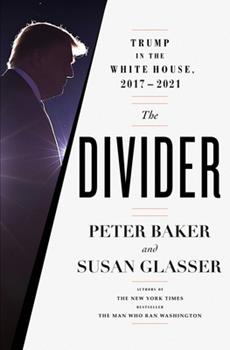
A political junkie I am. Having read Baker before I knew he was a thorough journalist and combined with his wife it made for a powerful and disturbing read, A lot covered territory covered before. Trumps disdain for military leaders who are not loyal to him, this stemming more from his lack of understanding of the basic checks and balances in the US constituion. A general lack of knowledge of why US alliance exist and their value. Trump was often called a transactional President. Coming from a business world he sought instant gratifcation, almost always in the form of dollars. What comes through in the book is his extreme vanity and lack of self confidence. When challenged it usually led to emotional meltdowns, leading to beratings of those who were in his administration. The Trump administration had high turnover and usually could be traced to the man at the top. He glorified himself at every opportunity. This book is well researched and a engaging read.

Categories Uncategorized

Thoughts on Ukraine

It has been over 100 days since Russia launched its invasion of Ukraine. This has led to countless lives lost. It has also caused destruction in many Ukrainian cities. All due to the lust for power and international recognition of one man: Vladimir Putin. Since the invasion, we have seen a significant impact at the almighty gas pump. The gas pump continues to fuel American lives, right or wrong. We are also starting to see food shortages on top of an inflation spike which is hurting peoples wallet’s. Fingers can be pointed but in this case they will all lead back to one man, no matter what your political agenda. Global affairs is not something many American’s pay attention to until it directly impacts them. No President has ever been elected because people were passionate about his foreign policy agenda. Ukraine will not alter that, but it will impact how foreign policy is carried out moving forward. We live in an interconnected world. In the end, we are all globalists whether we like it or not. Most Americans cannot find Ukraine on a map. However, Ukraine will impact us in the near term and long term. As funny as it may seem to some, geography matters. Here are just a collection of my thoughts.

There have been a number of books written about Putin. I have read a couple, such as Stephen Lee Meyer’s, “The New Tsar: The Rise and Reign of Vladimir Putin” and Fiona Hill and Clifford Gaddy’s “Mr. Putin: Operative in the Kremlin”. I would recommend both. Putin was a kid who grew up in the Soviet Union. He looked towards a future in the KGB. Which he achieved and was eventually stationed in Dresden, East Germany. This is where he would be when the Berlin Wall fell. As is well noted Putin would say the fall of the Soviet Union “was a disaster”. The next decade would be disastrous for Russia as it transitioned. Russia faced humiliation as it saw its standing in the world order plummet. It would also lay the groundwork for where we are today. From the ashes rose a new leader, seemingly from nowhere (ok he was from St Petersburg). He would be the number two behind Boris Yeltsin and thus on the world stage Putin was born. How he rose from relative obscurity to become a virtual dictator is still clouded in mystery. He had not done anything of significant note in his past, but obviously in the back ground he must have been a shrewd player

Over the next couple of decades, Russia would go through several US Presidents. In contrast, Putin would remain in Russia. Even when demoted to Prime Minister, he would return and consolidate power. Over these decades, many former Russian satellite countries joined the European Union. They also joined NATO, encircling Russia in alliances with its former enemies. This can only have created anxiety within Russia (and in Putin’s mind). During this time, Putin would increasingly challenge western Europe directly. He would test the boundaries of what he could do. Following the 2014 Sochi Olympics he would set his sites on Crimea and eventually annex Crimea. The west responded by reducing the G-8 to the G-7. Russia would interfere in the 2016 US elections and receive no punishment, with Trump in office it seemed they would skate along unimpeded. Acting like a puppet master to get what Putin wanted. But like all dictators they eventually over reach.

Putin is deeply immersed in Russian history. With that, he saw a nation in Ukraine. He believed Ukraine shared a common history with Russia. Strategically the black soils of Ukraine have always been the bread basket of Europe. Ukraine also has desired ports in the Black Sea. From a Russian perspective, Ukraine was a very attractive land grab. It could create a land bridge to strategic ports in Ukraine. By annexing Ukraine, Putin thought it was a win for both Russia and Ukraine. The problem was that Ukraine had no intention of becoming a Russian satellite. As has been noted, the expected welcoming of Russian troops into Ukraine did not happen. Instead, we have had a bloody war. Now, a common shared history is bent toward resentment and hatred. This shared history was not as glorious as Putin would have us think. One can discover this in Miron Dolot’s excellent book “Execution by Hunger: The Hidden Holocaust.” When communism showed up in Ukraine in the twenties, the results were disastrous. Many Ukrainians were led to starve to death. Stalin was a ruthless leader. History has along arc, and Ukrainians have not forgotten the suffering at Russian hands.

A second point is the global world order, which since the fall of the Berlin wall has been dominated by one nation: the United States of America. We have lived in a unipolar world, much to the dismay of many nations. Putin came of age and grew up in a bi-polar world, where it was the USA and the Soviet Union. Putin would love nothing better than to see Russia return to the international stage in a place of power. The short answer is that will not happen, not with Russia. However the idea of a bi-polar world will happen, that other power being China. A big reason comes down to GDP. Russia’s economy is small compared to the US, where as China’s is at 70% compared to US GDP and growing and gaining. Russia’s is less than 10%. You can view GDP info here. Even though Russia has a very strong military their ability to keep pace with the US and China will be limited do the availability of money. In the need all great militaries need funding. To have great funding you need a modern and growing economy to achieve your ambitions.

Putin made some significant strategic mistakes. Most significantly he felt NATO was not as strong as it had been during the cold war. To a large degree, this was true. NATO had struggled for purpose since the fall of communism. There was one exception, which was the Balkan War under President Clinton. This would also cause a split between the west and Russia. He underestimated the United States. It seems a common mistake. However, to his credit, President Biden rallied the allied forces. He has built a stronger and now expanding NATO. Putin has done what was seemingly impossible, he has caused Sweden and Finland to seek membership in NATO. Neutrality has been part of Sweden’s DNA for over a century, but frankly Putin left them little choice (since I started writing they are now accepted into NATO). Putin gave NATO a renewed purpose. In the background watching very closely and taking diligent notes is China as they have a similar grievance called Taiwan.

There have been of late chips in he alliance. Recently President Macron in France stated, “We must not humiliate Russia”. I understand the spirit and historical context, but in this case he is just wrong. The Balkan War was a case in point where Russia was simply not listened to and shown any respect. The difference being in that war it was Serbian leader Slobodan Milosevic who pursued geocide, which required international intervention. In this case Putin instigated this series of events and he will have to suffer its consequences. Macron comes across like a long line of French Leaders. He resembles leaders starting with Charles DeGaulle. They attempted to carve out a position of power as world leaders. These efforts have had limited success. That being said he is the one western leader in constant contact with Putin, which is better than a closed line. Right now a lot of attention at the negotiation table is finding a way for Putin to get out of Ukraine unscathed. Putin at the time this writing does not seem interested. The only thing Macron can buy him is time.

Economic pain being felt today and the foreseeable future will be the one thing that could cause the alliance to start to fracture. In my opinion it is also a opportunity. A main export for Russia is oil and much of the economic pain we see today stems from this . A gas prices rise so does the cost to get goods to market causing the prices of food to increase and this causing a spike in inflation. Our vacations will be scaled back as it is expensive to fly or drive anywhere. Going to restaurants is increasing in price, so we may have to eat in more. All this happening on the back drop of recovering form Covid, which has consumed us for over two years. The one thing in America that seem to be misunderstood by many is we do not set oil prices, even though we are the largest single producer of oil at 14% OPEC controls 37%. OPEC also controls 4/5 of global oil reserves. We are just a part of a global market place. Renewable energies can help offset costs at the pump as I am sure Tesla owners are very happy they are not on gas. This moment in time can be sure to accelerate that growth, but it is a long term play and will not help in the short run

Probably most concerning is not just the increase in food prices but the potential now for food shortages. Both Russia and Ukraine are major grain exporters In 2021 Ukraine exported 107 tons of grains and oilseeds. Much of that cannot move now do to ports being bombed along with grain silos. In terms of wheat exports Russia ranks number one, while Ukraine is number five. Having two countries in top 5 that are at war impacts global food prices. It is one thing to not be able to afford gas, but when food snot available people will begin to suffer and starve to death global opinions will change very quickly. In a world of social media and instant content, photos and video’s of people starving will have a major impact on peoples mental health.

Thinking long term Russia will become a pariah state. To the west. It’s one solace being it will have a welcoming market in China. However if Putin thinks this will be a game played on equal footing over time he will be sorely disappointed. China has its own global ambitions. If Russia can help further those, great. Nevertheless, Russia will be the junior partner in that relationship. If you read Rush Doshi’s book on China “The Long Game”, you will see that China has time. It is targeting and building the Chinese Century. Russia is not included and will not be a equal partner. It will be interesting how two big ego’s in Xi and Putin handle that relationship.

For Ukraine, Putin has done an anciently masterful job of creating a Ukrainian national identity. Not that it did not exist before, but Putin portrayed it as one with Russia. Now it is most definitely not one with Russia. It is now a country aligned with western Europe. Ukraine is seeking a future in the west, not the east. I do not think this will be as a member of NATO but down the road I could foresee a European Union membership (they have applied and will likely be accepted). They have existing status within the EU just not as a full member. Given they are an agricultural power house they would be welcomed. In the short term Russia will still try and hold sway over this decision.

Despite all that Putin has done wrong, it seems unlikely that Ukraine can holdout forever. This is true even with the significant investment of Western allies. Russia has a superior military with ample resources. It will likely secure the eastern part of Ukraine. Russia will also likely secure the southern coast. In the short run they will succeed but Ukraine will continue to resist and you will have a lengthy spell of an insurgency in the regions Russia has captured. They will continue to have access to weapons from the west. Not to mention Russia will be vulnerable on her borders with Finland and Poland. They have given NATO a purpose

Will the global order change? It most certainly will, that has been inevitable for some time with the rise of China and their One Belt, One Road initiative. Russia is looking to exploit that change and make themselves relevant on the world stage. Putin recently declared an end to the unipolar world. He might as well have said the United States world. This is true, and the reverberations will be felt for decades. In fact, they will probably be felt for the remainder of the century. How we handle and more importantly balance that relationship will be critical for future generations. In America we often view the world through American eyes. What is outside our borders does not matter. But as we can tell what has happened in Ukraine has impacted us. I am sure when Hitler annexed the Sudetenland, many US citizens said it would not impact them. It is easy to get comfortable in your own home. In America, we seem to excel at that. For long time we have lived in a global economy, and a global community. Driven in large part by the United States market driven economic policies. We are a connected global community. When that balance gets disrupted, the cracks in the system start to become magnified. This is what we are experiencing now.

Good Night and Good Luck,

Hans Henrik Hoffmann June 28, 2022

Categories Uncategorized

Ice Blue, Blood Red

Since the Reagan era there has been a large move away from the federal government. As he so eloquently said “Government is not the solution to your problems, government is the problem”. Though I am personally not a big Reagan fan, I have to give credit where credit is due as his influence on our country was immense. Not all of it good. His ideas officially ended when Donald Trump was elected. But the conservative movement without him would have been nothing. A big part of Reagan was shrinking federal government, but to be realistic though the attempt was made to shrink the federal government, the problems that governments deal with were not destroyed. They were just transferred to the states, which in many ways made sense. States are not like Federal government they have to balance the books, they do not have the Federal Reserve, they cannot print dollars and issue T-Bills. They can issue bonds, but these are passed by state voters. As I write the sidewalks I voted on several years ago are finally being made, through bonds the city of Shoreline issued. Is doing things at the state level a good thing, it all depends on the issue.

People in the country are always moving, in fact since 1492 people in the US have been moving as the country expanded. Before independence we had pioneers. People moving west, before and after independence. Seeking new opportunities, seeking new lives it was the spirit of the frontier (it also was in the spirit of genocide of native Americans). It was romanticized in print and later in film. In current times that spirit still exists as people exit cities like Detroit and Cleveland going to where opportunity is available, cities like Seattle and Austin. We are a entrepreneurial country, Ford is now replaced by Amazon and Microsoft. As Ford exported its economy so a new one was needed to be built, but that is something America excels at. In many ways the spirit of the pioneer lives on in America, to be honest it is just part of the American DNA.

Early on in COVID-19 the idea put forth by the Trump administration was to put the onus on the states. Let them battle out for supplies and the Federal government can play back up. Quickly we discovered since it was a new virus and we were not prepared. Early on it was ventilators, some states were ahead of the curve when it came to the spread early on of COVID-19. New York needed ventilators and requested help form other states, the ugly side of this being New York could only count on blue sates to help. Other states needed to rely on contacts. to get necessary supplies. Maryland’s Governor Larry Hogan leveraged his wife’s South Korean roots to get COVID tests as the Trump admin was unreliable. As they went to market states competed against each other for supplies. While people were suffering and dying the federal government turned a blind eye. There are certain problems that come about the that only the weight of the federal government can solve as they have the resources. They have access to money that states do not, states by definition have to be fiscally conservative. They have a military that understands supply lines and how to quickly create and facilitate. They can coordinate at a national level and focus on areas with urgent needs. All things that a state just does not have access or visibility to.

Now we come to another divide as it looks like the Supreme Court will overturn Roe v Wade and pass responsibility to the states. Some of the arguments I have to admit are head scratching, I guess I am not inline with the “originalist” views of the constitution. Yes abortion is not covered in the original document. Nor were women or black people (refer to Dred Scott). But what really concerns me is how differently woman will be treated depending on what state you live in. Those who are hurt the most are the most vulnerable, the poor and the uneducated. Neighboring states will also be affected. Idaho will trigger one of the most extreme abortion laws if and when Roe v Wade is overturned. Idaho accounts for 5% of abortions in Washington State, that number is expected to increase by 385% should the new abortion law be triggered. There will be a corporate effect as companies opt to move out of states they view as less supportive of their female workforce. Roe v Wade usually comes in at 65% for and 35% against, but in hi-tech companies with educated and a growing population of female employees I would think the number is even higher (Microsoft has already announced it will fly woman who need an abortion at companies expense) .

When I look at this I am not sure we have thought through the long term ramifications of pushing more and more responsibility to the states. But once Roe v Wade is overturned, given we have a very right leaning Supreme Court what is next? I think a likely target will be same sex marriage. People think we can push more and more down to the states. Like it or not what we are promoting is division as a nation. You will have states where you are not welcome based on your political views. The issue wit States determining personal freedoms is you are going to have a patchwork of freedoms across the country, no uniformity. Literally as you drive across states you could have gay marriage in one, none in the other , no interracial marriage in one, transgender rights in one etc…Then how those laws are enforced and severity of punishment will differ. In the end it will be utterly confusing and unsustainable. The only winners will be attorney’s. If I had a law degree I would focus on confusing issues as that is where the money is.

Increasingly we are becoming narrow minded and isolated in our residence of choice. People move to places where the state government and people are inline with their views. Today’s America sees its citizen retreating to what they view as safe havens. In the long run this will not make for a stable democracy. We are transitioning from blue states and red states to ice blue states and blood red states. We are becoming extreme. Where depending on your political outlook you will either be received with open arms or thrown back to whence you came. The cost will be freedom, ironic for a country that was built on those word, but at the same time hopefully we can appreciate the meaning. Right now I am not so confident. As former Secretary of State Madeleine Albright said “In the long run democracy is the most stable form of government, in the short run it is the most fragile”.

Good Night and Good Luck,

Hans Henrik Hoffmann May 11, 2022

Categories Uncategorized

Runaway Train

We have seen tremendous technological change in the past 30 years. With every year new possibilities emerge, new opportunities. The buzz words fly by faster than we can take hold of: AI, Quantum Computing, Machine Learning, the Metaverse, Robotics etc.. Things that seemed impossible yesterday now are within the realm of reality. So much of today was what was once only a twinkle in the eye of the latest science fiction movie or novel. Now the idea or creating human forms with Artificial Intelligence is within grasp. Our ability to do gene editing with tools like CRIPR and accelerate the development of cures for diseases like cancer are within reach. The Quantum realm is in play and companies race ahead looking for answers to algorithms that usually take decades to solve into minutes . The Metaverse is about creating human connections without having to physically connect. And yet with all these new breakthroughs come huge responsibilities. Can we control what we create? Are we disconnecting from what it means to be human? Some view the question as ridiculous, some view it as real. And yet the question must be asked – is humanity safe?

Throughout history change has caused human angst. A belief that new technology will displace jobs, displace a way of life. As we moved from an agrarian economy to an industrial economy the view was there would be great job displacement. As we learned many new jobs were created as people moved from the fields to industrial warehouses. In the process they were creating huge cities and the associated economies that came with it . Even as we moved from the industrial age to the information age jobs were being created but the skill sets required to fill those jobs had evolved. We required a more educated white collar work force Technology has evolved so very fast it is not surprising that human development has not kept pace, which is why the tech industry cannot fill the jobs they have, which makes the market extremely competitive for hiring talent.

We also viewed this change to job security and job displacement as immediate, but it is more like a slow drip. Today in America we have a homeless crisis. Go to any city New York, Phoenix, Las Vegas, Seattle, Portland, San Francisco, Los Angeles etc..You will see tents and litter strewn everywhere and anywhere. Like a plague slowly crossing the cities. We blame government, we blame people and in the intense crossfire of these arguments offer no solutions. Technology has played its role as well as good paying jobs were increasingly automated, reducing opportunity for many as we transitioned from a manufacturing economy to a service a economy. Those that had stopped their education at high school could not compete in the new knowledge economy. Jobs that came with good pay and benefits in the manufacturing world do not exist for the most part in the service economy. With the advent and advancement of robotics there will be disruption in the service economy and more displacement. To be clear tech played a part but we cannot lay everything at its feet, there is a lot more to this problem, but that would be another blog.

The difference this time around is human replication. We have grown accustomed to tech taking away manual labor. Discussion today around returning the manufacturing base from abroad to the US is usually met with skepticism, as most people realize those jobs have been replaced with robotics and the idea of shops floors filled with hundreds of happy line workers is pure fantasy and not within the realm of reality. Capitalism is not here for happiness it is here for profits (do not argue with me on this, argue with Milton Friedman). Thus the move to offshore and automate was met with great Wall Street enthusiasm, profits now, consequences not my problem. If Wall Street could profit on human suffering they would do it. They live a shallow existence.

The tech sector is hyper competitive. A continuous race against time and the competition. We like to say we have a moral compass, but when push comes to shove we lack perspective and ideals fall by the wayside. From a historical standpoint we only need to look back to the cold war and the development of the atom bomb. After the United States detonated two bombs in Japan we ended WWII and set the globe on the path to potential nuclear holocaust. The Soviet Union following the second world war immediately set put on a path to catch the United States, there could be no world where there was only one nuclear power. The lead scientist was nuclear physicist Andrei Sakharov. who ultimately in 1949 succeeded in detonating a atom bomb. But as time went by he saw what he had created and became a leading member of the nuclear disarmament movement and would be placed under house arrest in the Soviet Union. The race for global supremacy was underway, frankly we are lucky to still be alive. That race continues but more and more it has moved to the private sector. Luckily the private sector is not building atom bombs, but in the explosive times we live in it often feels like we are sitting on one.

As I said tech is a hyper competitive space where the fear of being left behind drives everyone in the industry. It fuels the day. If you make a mistake or are caught napping the results are disastrous. IBM was the king of tech until in a meeting with Microsoft discussing the licensing of MS-DOS for IBM PC’s, Bill Gates said, “We get to keep the software licensing rights?”. IBM said “ok” and the rest was history. Since that time the carnage the industry has left behind is legendary. The Lotus 123, WordPerfect, IBM OS/2, Real Networks, MySpace, a half dozed search vendors who never envisioned an economic model until Google destroyed them all, Microsoft Zune too little too late, the launch of the iPhone destroyed mobile phone providers overnight etc..The list is long and the cost to those who did not see is in the trillions. The industry cannot stop, it cannot pause, only delivering empty promises to “realize your potential”, for many that is a life of hopelessness. Because at the end of the day tech speaks to the highly educated, not the masses.

The race for the future is non-stop, governments can try and slow down, but given the snails pace they move at, by the time they decide the industry has moved on. We measure success by growth (simple view is growth = $$$). We are constantly pushing the envelope to find that new greenfield opportunity. Technology has expanded its footprint into all walks if life, into all industries, everyone looking to use for some level of advantage. Some things will provide great benefits to humanity like health care from cancer search to gene editing tools like CRISPR (though there will be moral consequences). Let’s just hope we do not put a huge cost to these breakthroughs .

Tech visionaries always see a glorious future. They are the Willy Wonka’s of our times, living a life of fantasy. They really are the last people we should trust. Many live life styles in the clouds not seeing what people in the gutter must suffer through. When you live life on the mountain top its easy to see the vast beauty of the world, but these are broad strokes that hide the gritty details and the cruel reality of what is on the ground. As we move ahead in this ever quickening environment more people will be displaced, as we move to AGI (Artificial General Intelligence), maybe even replaced. Once momentum reaches a certain velocity it becomes impossible to turn on the break, to slow down the train. It will seek more advancement, more profit, and more returns. The advancements we will see in the next 25yrs will be breathtaking, though the consequences of those changes may be damning.

Good Night and Good Luck

Hans Henrik Hoffmann May 2, 2022

Categories Uncategorized

Eastern Europe Revisited

It was 1987 and I was a young student studying abroad at the Danish International Studies (DIS) program in Copenhagen, I was just 20 years old and at this point had decided on a major, Business Administration, and not much else. Life was still an empty canvass. Things were much different in those days as personal computing was still very young and immature and there was no internet. We were a lot of naïve 20 yr old young adults who had not spent much time out of the confines and comfort of our home country. We were thrust into a foreign environment (a little less so for me as I had visited Denmark many times as I had family there). The excitement was that each day there was something new to learn, to experience. . As students we all relished in reading the International Herald Tribune and discussing political events in Europe. Mikhail Gorbachev was changing the Soviet Union with things like “glasnost” and “perestroika”. The leaders of the big three in the European Union (West Germany, France and the UK) were Kohl, Mitterand and Thatcher were each following different policies. Kohl was moving West Germany to the right, Mitterand was a Socialist (in time it would be in name only), and Thatcher was bringing the UK into the Milton Friedman school of economics. We discussed elections in Europe, we frankly, rarely talked about what was happening in the United States. It was exciting to learn about different democratic political systems. During my year in Denmark, there would be two national elections as the initial coalition elected when I arrived in August of 1987 could not hold and a new election was called for in June of 1988. There are other very high functioning democracies other than our own

At that time the Iron Curtain was still in full effect, the Cold War was still very real. As part of our time in Denmark we studied East-West relations. We had a Danish teacher names Lars Mittek Pederson who taught the course. He was an interrogator for the Danish military. He was 5’4″. Soviets beware. One thing you learned about communist states, unless it was a natural resource they did not have a lot to trade with the west. It made economic relations difficult and you had to be creative to make it work. Currency was obviously an issue as eastern currencies were not wroth much, so they had to do actual trading of goods. The cool thing we got to do as part of the program was in the fall we toured some of the Eastern Bloc countries. One group went to Poland and East Germany and the other group went to Czechoslovakia and Hungary. I was in the second group. So my plans were made to go to Prague and Budapest.

We flew out from the Kastrup airport just outside Copenhagen and had to stop in Budapest before proceeding to Prague. Landing in Budapest was an earie experience, it was dark and foggy outside with a few lights poking through the fog. In was out of a old fashioned Hollywood spy thriller where East meets West. I am sure Richard Burton starred in the film. Even though we were all on a plane, it all seemed very cold. We took off to Prague after spending an hour on the tarmac and landed safely in Czechoslovakia and were whisked away to our hotel on the main street in Prague. Prior to arriving in Prague we had all been given a few hundred Deutschmarks as we would need to exchange currency to the local Korana’s. The Hotel foreign exchange rates sucked but we had been told there was a thriving black market for western currency that offered much better rates. We checked into our Hotel and then hopped on the elevator with the bellhop (yes they actually had a bellhop). The bellhop was young, probably late twenties early thirties and since communism promised full employment we had a bellhop. Half way up to the fourth floor the bellhop stopped the elevator. The black market had arrived. I cannot remember the actual rate but it was significantly higher than the hotel rate. With the exception of one “follow” the rule person we happily exchanged our money. We were college student and understood money, as we did not have a lot.

The first night we ate at the hotel in a nice dining room and were served drinks in large Brandy sniffers. We indulged. It was our Danish guides who understood this would all need to be paid for. I do remember we had guest form the Czechoslovakian government, who spoke to us. Our group consisted of Americans and Canadiens, and one Australian. To lighten up the presentation the government rep asked if “Canada had become the 51st state yet?”. Joke did not go over so well with some members of our group. Following dinner we went out to explore the town. One thing about Prague which was cool was it was one of the few major European cities that was not bombed during the second World War, so it had a very old world feel to it. A first stop was the famous St Charles bridge, which was lined with statues. It was a chilly, foggy night as we walked across the bridge, which just added to the cold war feel of the city. Afterwards we wanted some nightlife and found a place open late. They had security at the door and he would not let us in, so we bribed him. Into the nightlife we went. It was a gay bar, which in hind site thinking about the eastern European attitudes towards homosexuality it was surprising we got in, but we paid in Western currency as every man has their price, especially in eastern Europe. We did not stay long and eventually called it a night.

The next day it was rise and shine and off to the tour bus . We had a lot of ground to cover. As it has been over 30 yrs my memories may be a bit rusty, so bare with me. Our DIS leader was a older business man named Preben Hoffmann, who routinely would fall asleep on the bus rides and wake up with dandruff all over his sports coats (we were all dressed in business attire for the excursion). A second DIS leader was Karin who worked in the DIS office, she was late twenties as far as I could tell. We also had a Czech tour guide, whose name I cannot remember. On this day we stopped at the Jewish cemetery in Prague. I think it was the one opp on the trip we had to see the travesty of WWII. Since Prague, was not bombed during WWII and thanks to communism, Prague had not evolved and certain locations were preserved, not out of reverence, there was juts no motivation to change anything. For lunch we went to a castle and ordered food which took an hour to get, service was not a strength so we chatted for a long time. We finally got our food and were ready to go, but for whatever reason some people needed to order dessert. About 2 1/2 hrs after we arrived we finally departed. We toured a dairy plant. The one image that impacted me was at the end of a production line a woman would wait for the milk case to arrive , which given the pace was about one every two minutes and then put the case on a pallet. In the meantime she stood and smoked cigarettes, she looked incredibly bored and if I were her I would smoke two packs of cigarettes every day, hoping it would speed up my death. But communism guaranteed full employment and there was a cost.

That evening we would go to the famous Estates Theater, which was not far from our hotel. We were to see a opera, the Passion Play, so a biblical event. We were put in one of the private boxes on the second level so we had a front row and were in a luxurious setting. I was somewhat familiar with the theater as it had been used as part of the Academy Award nominated film Amadeus, which I was a big fan of. We were actually set up in two rows, behind me was a fellow student Bill, who had come prepared with a walk man. As the curtains raised I could here a faint familiar sound behind me, it was the opening guitar riff for the B’52’s classic, Rock Lobster. I turned and Bill just smiled. I think Bill really enjoyed the show.

The last day was rather exciting, because as usual things were moving slowly. I cannot remember the issue but our Czech tour guide and Karin had to go to a government office (I think it may have been something to do with Karin’s visa). The line was slow and Karin was getting nowhere. The tour guide jumped in and tried to get the person behind the counter to hurry up, but apparently she did not like his tone and closed the blind on him (at this point we had a clear picture of teller behind an encased space where she had ability via blind to shut people out). This is where the story got a bit odd. The tour guide had a small knife and tried to slip the knife under blind and raise the blind up. The teller opened the blind to see tour guide holding a knife pointed towards her. The police were called and he was arrested. We never saw nor heard from him again.

As we rounded out are stay in Prague a few things struck me. In terms of consumer goods there was nothing that was remotely interesting. I also witnessed lines for food. In terms of consumer activity there was little. In terms of service anywhere there was no sense of urgency (even by European standards). Was there issues of secret police? Yes. One story was on our last day a few students went out with some locals who could speak English and have a beer (interestingly national beer was Budweizer – no direct relation to US Brand). As we were in a small pub our hosts would constantly look over their shoulders to see ho may be watching or listening. Czechoslovakia was know as one of the stricter communist satellites in the Eastern bloc, probably legacy of the Prague Spring of 1968. Thinking back on Prague it was a great experience in learning what freedom means.

From Prague we flew back to Budapest. We already felt as a group we were now more experienced in the dark arts of currency exchange in the Eastern bloc. Highlighted by the fact that I don’t remember the actual exchange, but it was apparent by then that the black market found you, you did not find it. We were greeted by a tour guide, who would be our host during our stay in Budapest. Our Danish leader Karin, who had been traveling with us seemed to play a more prominent role in Budapest as the liaison with the tour guide (I think his name was Peter – I will just go with it from here on out). Perhaps because Budapest was closer to Vienna and the west it had a more lively vibe than Prague, you felt that almost immediately. This of course is lively by communist standards. We upgraded from a slug to a snail.

As usual we woke up and got dressed for success and headed out on the tour bus to take in the sites of Budapest. We went to Karl Marx University, I am sure there were many in the Eastern Bloc. Our guest speaker came in dressed in what looked like a nice wester suit. He spoke impeccable English. It turns out he had studied at Harvard. I cannot remember the substance of the talk but it was impressive that his manor was much more western than many we had already had to listen to. I remember they had a Karl Marx statue, but in hind site it was humorous to have such a western looking presentation at a center of communist thought

From there our tour guide, Peter took us across the river to a castle in a bluff that overlooked Budapest. As Peter explained Budapest was two sides of the river. There was the “Buda” side and the “Pesta” side. I equated the “Pesta” side with having an insect problem. We were in a castle that over looked the city and the Danube river, it was really quite stunning

Another stop was the Heroes Square and The Millennium Monument, where we would get a big group photo in front of this magnificent monument. We were a group of young adults on the go. I don’t know if any of us had any idea what we would see when we got to Budapest (and Prague), it was just part of the program and we were along for the ride. One thing about Budapest that was significantly different than Prague was they had opened a little to the idea of free enterprise. They actually had a fast food burger joint, which we all tried. The Hungarians had done it, they had given new meaning to greasy food. That being said, no it was not McDonald’s, but it fulfilled a craving for fast food we all had.

A key memory for me was when we had some downtime and a fellow student, David Ricardi and I were having a deep conversation of our travels, walking along the Danube in front of some beautiful government buildings. It was frankly one of those things you could only do in Europe. It was one of those moments when you are young and you just appreciate the fact that you are somewhere having an experience. That you were actually living and enjoying a moment. Later on David and I would connect with other members of the group and go our for beers. Afterwards David and I were with our Danish guide Karin, walking back to the hotel. Near the hotel they had a little pizza kiosk (looked like an old Fotomat ) and David and I introduced Karin to the American late night tradition of eating pizza before we go to bed. I think Karin thought it was a bit weird, but she sure enjoyed the pizza.

It was soon time to leave and fly back to Copenhagen, and back to school. We had an extra week and some students went on a tour to the Soviet Union. I would hop a train and go to north to Aalborg and spend the week with family. I would read Pricilla Pressley’s book “Elvis and Me” in Danish (kinda proud of that). By Monday, a week later, talking about our adventures abroad. I just remember our teacher Lars Mittek Pederson saying in class, “I did not want to tell you this before you left, but those eastern airlines go down all the time, it is ridiculous”. Good to know and glad he waited to tell us.

Looking back now over 35 yrs ago, a lot has changed, obviously. Just 2 years later the Berlin Wall would fall and Germany would start the process of re-unification. In 1991 the Soviet Union would collapse creating a group of new nation states (Kazakhstan, Lithuania, Ukraine, Estonia, Latvia etc…). In 1992 Czechoslovakia would dissolve and become the Czech Republic and Slovakia. NATO and the European Union would begin their expansion eastward Russia would try capitalism and fail. They would not start to gain some stability until the arrival of a good old fashioned Russian dictator named Vladimir Putin. The US would struggle, in its own way, as it is hard to adjust after having so many years of a defined enemy. We seem now to have come full circle with the Russian invasion of the Ukraine. We may be entering a much more violet time as the world seems to be moving toward a bipolar power structure after having so many years of just American power. This is being driven more by China than Russia, but that is another topic for another blog post. Eastern Europe is far more free now than when I visited, though there are distressing signs in place like Hungary and Poland. Belarus is very locked down as is Russia. Are we going back to communism, short answer no (a lot of people mistake tax policy for communism). Karl Marx had a huge influence on the 20th century but his philosophies were born unto what was happening in the 19th century. He died in 1878.

Traveling in Eastern Europe gave me a lot of wonderful incites, which obviously had a positive influence on my outlook of the world. It provided me the opportunity to see what was the dying days of the communist system. The daily struggle people lived behind the Iron Curtain. A certain dreary view of the world, knowing there is a lot happening in the west they just are not allowed to participate. It is one thing to read about these things, it is completely different to have the opportunity to experience it. I drew from a fading an aging and fading memory so hopefully you enjoyed this trip down memory lane.

Good Night and Good Luck

Hans Henrik Hoffmann

April 12, 2022

Categories Uncategorized